Description
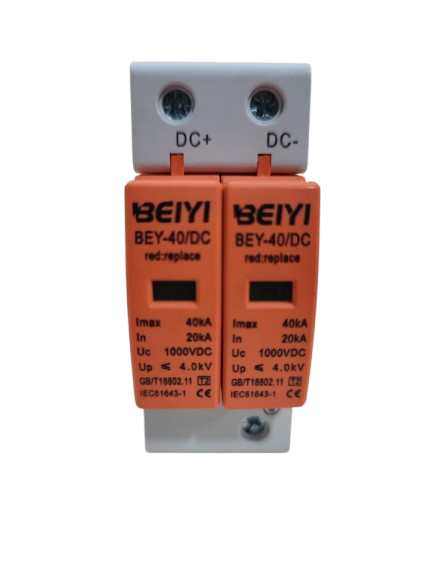
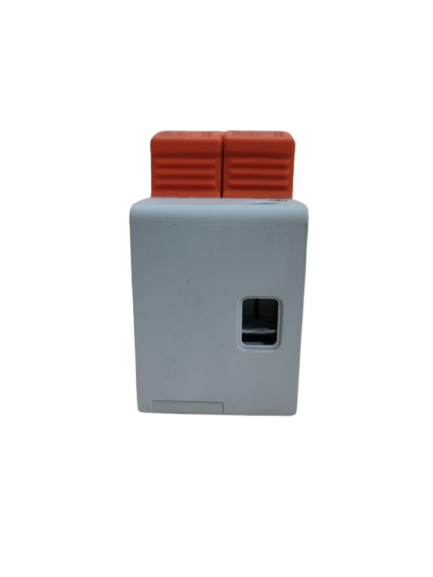
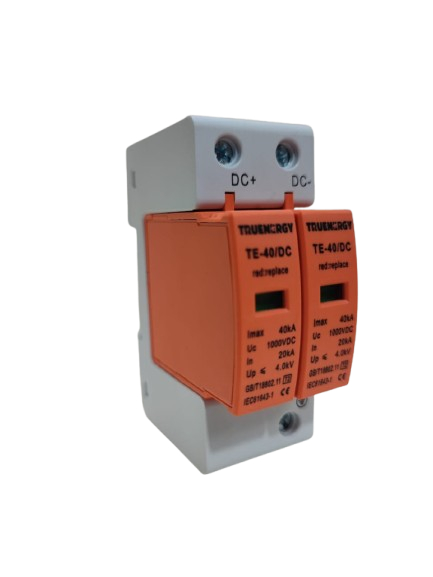
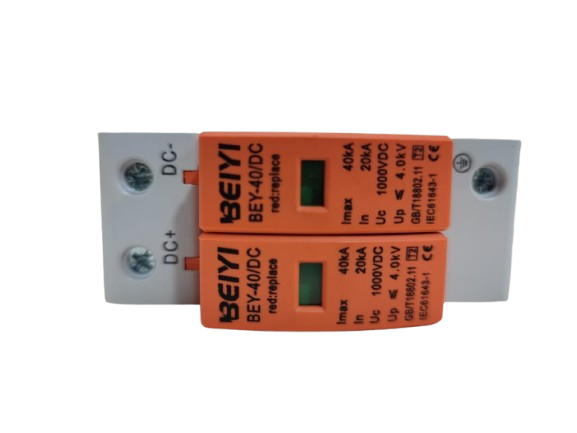
SPD DC Surge Protective Devices
DC Surge Protective Device (SPD) is a safety component that protects electrical equipment from over-voltage surges on DC lines — especially solar PV (photovoltaic) arrays.
When lightning strikes or there’s a sudden spike in voltage, the SPD diverts excess energy to ground so it doesn’t damage your inverter, charge controller, batteries, or other DC equipment.
In solar power systems, DC SPDs are installed between the PV panels and the inverter/charge controller.
Why DC SPDs Are Important
DC electrical systems (like solar arrays) are vulnerable to:
Without protection, these surges can:
SPDs help limit voltage to a safe level, preserving equipment and improving safety and reliability.
Where DC SPDs Are Installed
In a typical solar power system with MPPT controller or hybrid inverter:
PV Arrays (DC) → DC SPD → Solar Charge Controller / Hybrid Inverter → Battery Bank
DC SPDs are not installed on the AC side; those require separate AC SPDs.
Types of DC SPDs
1. Type 1 DC SPD
Use-case: Large commercial systems, rooftop installations with high lightning exposure
2. Type 2 DC SPD
-
Most common in solar PV systems
-
Protects against indirect surges & switching transients
-
Installed at PV combiner boxes or at inverter input
Use-case: Residential and commercial solar systems
3. Type 3 DC SPD
-
For point-of-use protection
-
Lower energy capacity than Type 1 and 2
-
Used near sensitive equipment
Use-case: Additional local protection (not primary SPD)
How DC SPDs Work
When voltage surpasses a threshold:
-
SPD conducts surge current to ground
-
Voltage is clamped at a safe level
-
Once surge ends, SPD returns to normal
Key components inside SPDs:
-
Metal Oxide Varistors (MOVs)
-
Transient Voltage Suppression (TVS) diodes
-
Sometimes gas discharge tubes
Key Specifications to Understand
| Spec |
Meaning |
| Nominal DC Voltage (Un) |
System voltage the SPD is meant for (e.g., 24 V / 48 V / 1000 V) |
| Maximum Continuous Operating Voltage (Uc) |
Max voltage SPD can withstand continuously |
| Voltage Protection Level (Up) |
Voltage level SPD clamps at during a surge |
| Nominal Discharge Current (In) |
Surges SPD can handle repeatedly |
| Lightning Impulse Current (Iimp) |
Peak current from a lightning surge |
| Response Time |
How fast SPD reacts (ns or µs) |
Choosing the Right DC SPD
Here’s how to pick an appropriate SPD for a solar DC system:
✔ Match the System Voltage
Important: Ensure the SPD’s Uc (continuous rating) is higher than your highest expected DC voltage.




Reviews
There are no reviews yet.